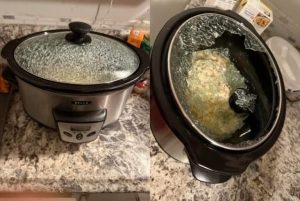
ean Meats (Without Moisture)
Slow cookers excel at transforming tough, fatty cuts into tender dishes, but lean meats like chicken breast or pork loin can dry out without enough fat or liquid.
What Happens: Lean cuts become dry, stringy, and flavorless.
Solution: Opt for fattier cuts like chicken thighs, chuck roast, or pork shoulder. If you must use lean meat, add extra broth, sauce, or marinade to keep it moist.
6. Pasta
Pasta and slow cookers don’t mix well. Left to cook for hours, noodles soak up too much liquid and turn into a mushy mess, ruining the texture of soups, stews, or casseroles.
What Happens: Overcooked, soggy pasta that overwhelms the dish.
Solution: Cook pasta separately and stir it in just before serving. For lasagna recipes, choose no-boil noodles, which hold up better in the slow cooker.
7. Rice
Like pasta, rice absorbs liquid quickly and may either overcook or remain undercooked. White rice becomes sticky and mushy, while brown rice often doesn’t cook evenly.
What Happens: Rice can turn to mush or stay crunchy, ruining the dish.
Solution: Cook rice separately and add it at the end. Instant rice is a better option for slow cooker recipes but still requires careful timing.
8. Raw Beans
Dry beans, particularly kidney beans, must be soaked and boiled before consumption. Cooking them raw in a slow cooker is not only ineffective—it can be dangerous due to naturally occurring toxins.
What Happens: Undercooked beans can cause food poisoning because of lectins, toxic compounds in raw beans.
Solution: Pre-soak and boil dry beans on the stovetop, or use canned beans, which are already safe and fully cooked.
9. Delicate Vegetables
Vegetables like spinach, zucchini, and mushrooms release water and quickly break down in a slow cooker, losing texture and flavor.
What Happens: Spinach wilts into nothing, zucchini becomes watery, and mushrooms disintegrate.
Solution: Add delicate vegetables during the last 30–60 minutes of cooking to preserve their structure.
10. High-Sugar Fruits
Fruits such as apples, pears, and berries contain high levels of sugar that can burn or turn mushy in a slow cooker. Extended cooking can overwhelm the flavor and alter the texture of the dish.
What Happens: Fruit becomes overly soft, loses shape, and may taste bitter.
Solution: Add fruit in the last 30 minutes of cooking, or use it as a fresh topping after the dish is finished.
11. Quick-Cooking Vegetables
Certain vegetables like bell peppers, peas, and green beans cook quickly and do not require long simmering. Leaving them in the slow cooker for hours results in limp, flavorless, overcooked vegetables.
What Happens: Vegetables turn soggy, dull, and lose their bright color.
Solution: Add these vegetables toward the end of the cooking cycle to maintain texture, color, and flavor.