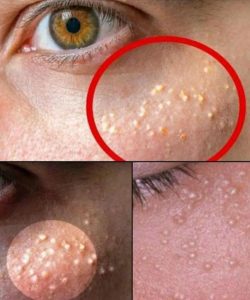
Have you ever caught your reflection and noticed tiny white bumps sitting just beneath your skin — especially around your eyes, cheeks, or forehead?
At first glance, they may look like whiteheads. But unlike acne, they don’t squeeze out. They don’t inflame. And no matter how many cleansers or creams you try, they seem to stay exactly where they are.
These small, firm bumps are called milia (pronounced mil-ee-uh). They’re incredibly common and completely harmless — but that doesn’t mean they’re not frustrating, particularly as your skin becomes thinner and more sensitive with age.
The reassuring part? In many cases, milia can be improved with gentle care at home — no aggressive treatments required.
Let’s explore what causes them, why they tend to appear more often over time, and how you can manage them safely and naturally.
What Is Milia?
Milia are tiny cysts that form when keratin — a natural protein found in your skin, hair, and nails — becomes trapped beneath the skin’s surface.
Normally, dead skin cells shed on their own. But when that process slows down, those cells can get sealed under the surface instead of exfoliating away. Over time, they harden into small, pearl-like bumps.
Unlike acne:
-
They are not caused by bacteria.
-
They are not clogged pores.
-
They are not painful or contagious.
However, they can create uneven texture and make skin appear rough, especially in delicate facial areas.
Why Do Milia Form?
Milia can affect anyone, but they become more common as skin matures. This is largely because natural cell turnover slows down over time.
Common triggers include:
-
Dead skin cells that don’t shed properly
-
Long-term sun exposure (which thickens the skin)
-
Skin injuries like burns, rashes, or abrasions
-
Heavy or oil-based skincare products
-
Prolonged use of steroid creams
-
Certain genetic or autoimmune conditions
Sometimes, milia simply appear without a clear reason — a natural part of how skin regenerates as it ages.
Where Do Milia Usually Appear?
Although they can form anywhere on the body, milia most commonly show up on:
-
Under the eyes
-
Upper cheeks
-
Forehead and temples
-
Nose
-
Chin
-
Chest
-
Arms or legs
In mature skin, the eye and cheek area are especially prone because the skin there is thinner and more delicate.
Should You Worry?
In most cases, milia are harmless.
They don’t itch.
They don’t hurt.
They don’t spread easily.
However, if a bump changes in size, becomes red, painful, or inflamed, it’s best to consult a healthcare professional to rule out other skin conditions.
What Not to Do: Don’t Try to Pop Them
It’s tempting — especially since milia resemble whiteheads.
But squeezing them can cause:
-
Scarring
-
Infection
-
Dark spots or discoloration
-
Delayed healing
Milia sit under a thin layer of skin — not inside a pore — which makes home extraction unsafe.
Instead, focus on supporting your skin’s natural renewal process.
Gentle, Natural Ways to Treat Milia at Home
If your milia aren’t painful or inflamed, you can often reduce their appearance with consistent, gentle care.
Please Head On keep on Reading (>)