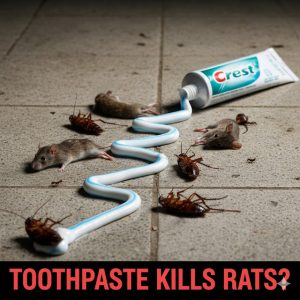
You’ve probably seen the viral hack:
“Just squeeze toothpaste in the corners—pests hate it!”
It sounds simple, cheap, and chemical-free. But does it actually work? Let’s separate internet myth from real-world results—so you don’t waste time, money, or false hope.
🦷 The Short Answer: No, Toothpaste Is Not a Reliable Pest Repellent
Toothpaste may contain ingredients like mint flavoring or baking soda that seem unpleasant to pests. However, there’s no solid scientific evidence proving that toothpaste effectively repels or eliminates mice, cockroaches, or ants.
In some cases, it can even attract them.
Let’s look at each pest individually.
🐭 1. Mice
The Claim:
Minty toothpaste smells too strong, so mice stay away.
The Reality:
Mice do dislike strong scents like concentrated peppermint oil. But toothpaste contains only small amounts of mint flavoring—often artificial and not potent enough to deter rodents.
Even worse, many toothpastes contain:
-
Glycerin
-
Sorbitol
-
Mild sweeteners
These ingredients can attract rodents searching for easy calories.
✅ What Actually Works:
-
Seal all entry points (mice can squeeze through gaps as small as ¼ inch)
-
Use steel wool to block holes
-
Store food in airtight containers
-
Use snap traps or professional exclusion methods
-
Apply concentrated peppermint oil (not toothpaste) on cotton balls
🪳 2. Cockroaches
The Claim:
The baking soda in toothpaste kills roaches.
The Reality:
Yes, baking soda can kill roaches—if they eat enough of it mixed with sugar. It reacts with stomach acid and creates gas buildup.
But toothpaste:
-
Contains too little baking soda
-
Often includes fluoride and detergents roaches avoid
-
Leaves moisture and residue that may attract curiosity
It simply isn’t strong enough or formulated for pest control.
✅ What Actually Works:
-
Boric acid used properly
-
Gel baits placed in hidden areas
-
Diatomaceous earth
-
Fixing leaks and eliminating moisture
-
Deep kitchen cleaning
Roaches are driven by water and food—not toothpaste.
Please Head On keep on Reading (>)