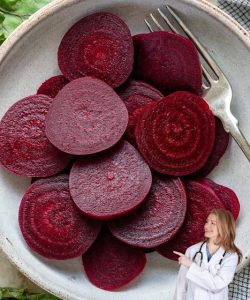
Beets—also known as beetroot—are far more than a colorful side dish. Beneath their deep red-purple hue lies an impressive nutritional profile that supports circulation, digestion, brain function, and overall vitality. Whether you enjoy them roasted, blended into smoothies, juiced, or sliced raw into salads, beets offer powerful health benefits backed by science.
Let’s explore why this humble root deserves a regular spot on your plate.
1. Packed with Essential Nutrients
A 100-gram serving of raw beets provides:
-
Fiber (2.8g) – Supports digestion and gut balance
-
Folate (Vitamin B9 – 27% DV) – Essential for cell growth and pregnancy health
-
Manganese (16% DV) – Important for bone strength and metabolism
-
Potassium (9% DV) – Helps regulate blood pressure
-
Iron & Vitamin C – Work together to support oxygen transport and immune health
At only about 43 calories per 100 grams, beets deliver dense nutrition without excess calories—making them an excellent addition to most eating plans.
2. Powerful Plant Compounds That Make Beets Unique
Betalains – Potent Antioxidants
Beets get their rich color from compounds called betalains. These antioxidants:
-
Help reduce inflammation
-
Support the body’s natural detox pathways
-
Protect cells from oxidative stress
Natural Nitrates – Circulation Enhancers
Beets are one of the richest natural sources of dietary nitrates. In your body, these convert to nitric oxide—a molecule that:
-
Relaxes and widens blood vessels
-
Improves blood flow
-
Enhances oxygen delivery to tissues
-
Supports physical performance
3. Evidence-Based Health Benefits
Supports Healthy Blood Pressure
Research shows that drinking about one cup (250 ml) of beet juice may help lower systolic blood pressure within a few hours. This effect is linked to nitric oxide’s ability to improve vessel flexibility.
If you take blood pressure medication, consult your healthcare provider before increasing intake.
Please Head On keep on Reading (>)