3. Why Fat Forms White Spots
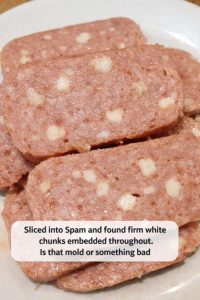
Spam is cooked directly inside the can during processing. As it cools, proteins and fats solidify in place. Because fat naturally rises when heated, it can settle and harden into visible white spots once cooled.
This is completely normal for many cooked and canned meats.
4. Visual Signs Your Spam May Have Gone Bad
While Spam has a long shelf life, spoilage is still possible. Watch for:
-
Greenish or dark discoloration
-
Slimy surface
-
Unusual separation
-
Bulging or leaking can
A bulging can may indicate bacterial activity and should never be consumed.
5. Quick Smell and Texture Check Before Eating
Before using Spam, do a simple check:
-
Smell: It should have a mild, salty, meaty scent. Sour or rancid odors mean discard it.
-
Texture: It should feel firm but slightly springy. Mushy or overly soft texture can indicate deterioration.
When in doubt, don’t taste-test questionable meat.
6. When White Spots Could Be a Concern
White spots are generally safe if they are:
-
Firm
-
Odorless
-
Consistent with fat
However, if they’re paired with sour smells, discoloration, or strange textures, it’s better to avoid eating it. In rare cases, fat breakdown from spoilage can look unusual.
Trust your senses.
7. Expiration Dates, Storage, and Temperature
The date on the can reflects peak quality, not necessarily a strict safety deadline. Properly stored canned goods can last beyond the printed date.
For best results:
-
Store in a cool, dry place
-
Avoid high heat
-
Do not use cans that are dented, swollen, or leaking
Heat exposure can compromise the seal and reduce safety.
8. Safe Handling After Opening
Once opened:
-
Refrigerate immediately
-
Store in an airtight container
-
Consume within 3–5 days
-
Use clean utensils to prevent contamination
Proper storage significantly reduces the risk of mold.
9. What Food Safety Experts Say
The United States Department of Agriculture (USDA) states that properly processed and undamaged canned meats are safe when stored correctly. They recommend inspecting cans before opening and discarding any that show signs of damage or swelling.
Canned foods can often remain safe beyond their printed date if properly stored.
10. When to Contact the Manufacturer or Throw It Away
You should discard the product if you notice:
-
Strong off-odor
-
Slimy texture
-
Visible mold
-
Bulging or leaking can
If you’re unsure, contacting the manufacturer for clarification is always an option. But when safety is questionable, it’s better to throw it out.
11. If the White Chunks Bother You
If the appearance of fat chunks is unappealing, consider:
-
Reduced-fat canned meat options
-
Low-sodium varieties
-
Fresh deli-style alternatives
These options may contain less visible fat.
Final Takeaway
Firm white chunks in Spam are almost always solidified pork fat — a normal and harmless part of the product. As long as the meat smells normal, feels firm, and shows no signs of mold or spoilage, it’s typically safe to eat.
When it comes to canned foods, your senses are your best safety tools. If something smells, looks, or feels wrong, don’t risk it.