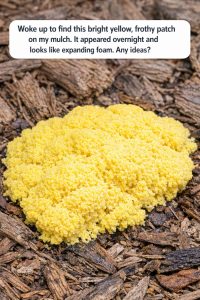
5. The Science Behind This Odd Organism
Slime molds like Fuligo septica are classified as protists, not fungi. During their active phase, they exist as a plasmodium — a single, flowing mass of cytoplasm that moves and consumes food somewhat like an amoeba.
When conditions become dry or less favorable, the slime mold forms spore-producing structures. These spores spread by wind or water, settling into new areas where they remain dormant until moisture and warmth return.
It’s a fascinating example of how adaptable and unusual life forms can be.
6. What Conditions Trigger Its Growth
Slime mold thrives when mulch stays:
-
Warm
-
Moist
-
Rich in organic material
Common triggers include:
-
Heavy rain followed by warm temperatures
-
Frequent watering
-
Poor drainage
-
Thick layers of wood-chip or bark mulch
Mulch holds moisture extremely well, making it the perfect temporary home.
Should You Remove It?
Removal isn’t necessary unless you dislike the appearance. If you prefer to get rid of it:
-
Rake or shovel it away.
-
Break it apart to help it dry out.
-
Improve drainage and reduce excess watering.
It will usually dry up and disappear on its own within a few days.
Bottom Line
That strange yellow foam isn’t chemical waste or a plant disease — it’s simply nature at work. While it may look alarming, dog vomit slime mold is a harmless, short-lived visitor that actually contributes to soil health.
Sometimes the strangest things in the garden turn out to be the most interesting. 🌱