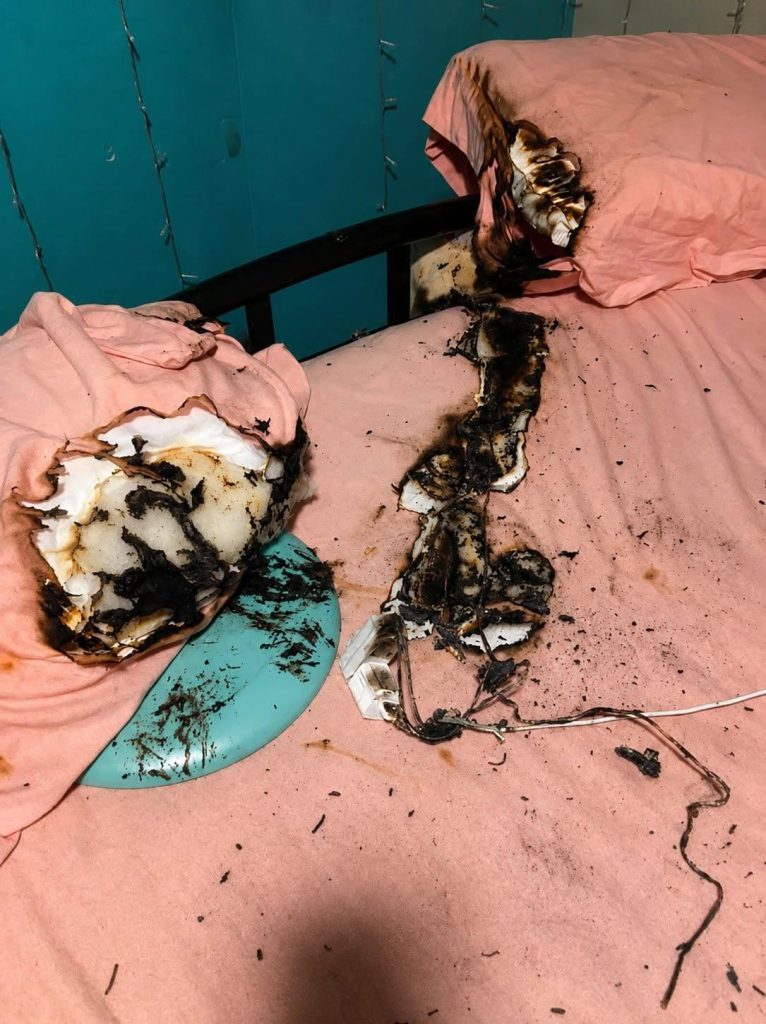
For the vast majority of us, plugging our smartphone in right next to the bed before going to sleep is an automatic nighttime routine. We want a full battery by morning, and we want our phone within arm’s reach so we can easily hit snooze on the alarm.
However, fire departments across the globe are issuing a critical safety message to families: this common habit is a major house fire risk.
When a phone charges, it naturally generates heat. If that heat cannot escape, a routine charge can rapidly transform into a life-threatening emergency. Firefighters are urging everyone to change where and how they charge their devices before the next bedtime.
The Science Behind the Smoke: Thermal Runaway
To understand why a smartphone can become a fire hazard, you have to look at the battery. Modern devices rely on Lithium-ion batteries. While highly efficient, these batteries are highly sensitive to temperature fluctuations.
When a device is actively plugged into a power source, the chemical reaction taking place inside the battery generates heat as a byproduct. Under normal circumstances—such as sitting on a hard, flat desk—that heat safely dissipates into the surrounding air.
The danger peaks when a phone is placed on a soft, insulating surface like a mattress, sheets, or tucked directly under a pillow. Thick bedding traps the heat against the phone. As the temperature rises, it triggers a destructive cycle known as thermal runaway. The battery gets hotter, which accelerates the internal chemical reaction, making it hotter still, until the battery swells, ruptures, and erupts into intense, fast-moving flames.