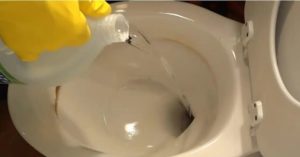
🧼 The Foolproof 4-Step Method
Step 1: Lower the Water Level
Flush the toilet, then use a small cup or turkey baster to remove as much standing water from the bowl as possible.
👉 Why this matters: You want the vinegar to make direct contact with the stains instead of getting diluted.
Step 2: Pour in the Vinegar
Pour 1–2 cups of distilled white vinegar into the bowl, focusing on the stained areas—especially the ring below the waterline.
💡 Pro tip: Warm the vinegar slightly (about 30 seconds in the microwave). Warm vinegar speeds up the acid’s stain-dissolving power.
Step 3: Let It Soak
Allow the vinegar to sit for 2–3 hours, or overnight if the stains are severe.
👉 Optional boost: After soaking, add ½ cup of baking soda. The gentle fizz helps lift loosened residue. Just don’t add it too early—mixing it right away cancels out the vinegar’s acidity.
Step 4: Scrub & Flush
Give the bowl a light scrub with a toilet brush. The stains should come off easily—no aggressive scrubbing required.
Flush and enjoy a toilet bowl that looks clean, bright, and refreshed. ✨
💡 When Vinegar Alone Isn’t Enough
For extremely stubborn stains—such as years of buildup or high iron content causing deep rust—vinegar may need a little backup.
Try this method:
-
Mix vinegar with borax or washing soda to create a thick paste
-
Apply it directly to the stain
-
Let it sit for 1–2 hours, then scrub and flush
⚠️ Important safety note: Never mix vinegar with bleach. This combination creates toxic chlorine gas and is extremely dangerous.
🛡️ How to Prevent Hard Water Stains From Coming Back
-
Weekly vinegar rinse: Pour 1 cup of vinegar into the bowl once a week, let it sit for 30 minutes, then flush
-
Dry occasionally: Wipe the bowl dry with a microfiber cloth to prevent mineral rings from forming
-
Consider a water softener: If hard water is a constant issue, this reduces minerals at the source
🌟 Final Thought
A clean toilet isn’t just about appearances—it’s about comfort, hygiene, and peace of mind. And the best part? You don’t need a cabinet full of cleaners to make it happen.
Sometimes the simplest solutions—like a $2 bottle of vinegar—are the most powerful.
So the next time that orange ring appears, don’t dread it.
Just pour, pause, and let chemistry do the work. 💛