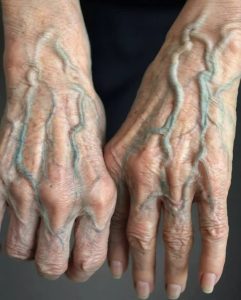
1. Dehydration
Why it happens: Less blood plasma makes veins more visible.
Other signs: Dark yellow urine, dry mouth, fatigue, dizziness, headache.
What to do: Drink fluids. If symptoms persist, seek medical care.
2. Improved Cardiovascular Fitness
Why it happens: Regular cardio increases blood volume and vein elasticity, making veins more noticeable.
Other signs: Lower resting heart rate, increased stamina.
What to do: Nothing—this is a positive sign of a healthy circulatory system.
3. Potential Vascular or Health Concerns
Sometimes, prominent veins can hint at underlying conditions:
-
Superficial Thrombophlebitis: Inflamed veins close to the skin, often tender, warm, or red.
-
Venous Insufficiency: Weak valves can cause blood pooling, more common in legs but sometimes in hands.
-
Significant Weight Loss or Low Body Fat from Illness: Conditions like malnutrition or eating disorders can reduce fat padding, revealing veins.
-
High Blood Pressure: Persistent hypertension may make veins more prominent over time.
-
Rare Conditions: Some systemic or connective tissue disorders can affect vein visibility.
When to See a Doctor
Seek professional advice if you notice any of the following alongside visible veins:
-
Pain, tenderness, warmth, or swelling along the vein
-
Sudden appearance in one hand only
-
Skin changes like discoloration, ulcers, or rashes near veins
-
Veins that feel hard, cord-like, or lumpy
-
Systemic symptoms like unexplained weight loss, fever, or fatigue
The Bottom Line
For most people, visible veins in the hands are completely normal, influenced by genetics, fitness, temperature, and hydration. They often indicate a healthy circulatory system.
Take note of changes but don’t panic. Use it as a chance to check in with your body—are you staying hydrated? Losing weight? Noticing other new symptoms?
If anything feels off or painful, schedule a check-up. Otherwise, admire your veins as the intricate roadways of your body, right on the surface.